
A Guide for the Perplexed
Detailed instructions on how to say the pre-1911 Office between Christmas and Epiphany

III Kalendas Ianuarii (30 December) Anno Incarnationis MMXXV
Day VI of the Octave of Our Lord’s Nativity
Day V of the Octave of Saint Stephen
Day IV of the Octave of Saint John the Evangelist
Day III of the Octave of the Holy Innocents
In the actual ‘traditional’ Roman Office, that is the Office according to the customs which prevailed prior to Pius X’s disastrous ‘reforms’ of 1911, the twelve days between Christmas and Epiphany are one of the most beautiful but, at the same time, most challenging periods of the year to say the Divine Office. I have gone into the beauty elsewhere, but here it seemed good to give a bit of practical advice on how to say the Office during this time of year - so that others may avoid some of the rocks and shoals that I have personally struck in my time learning the pre-Pius X Office.
There are a lot of unexpected twists and turns and irregularities that won’t be found at any other time of year, along with variations and movements of feasts that depend on which day of the week a certain feast or calendar day might happen to fall on in any given year. This can be immensely challenging for those who are new to the pre-1911 arrangement of things, and even those who are not new to it, so I decided to put together a day by day guide on how to navigate the crisscrossed currents of this time of year.
The astute reader of the following handbook as it were will note that I have not included the Feast of the Holy Name of Jesus1 that is near and dear to the hearts of so many ‘trad’ polemicists. It is of very recent vintage, instituted by Pius X,2 and not a part of the actual traditional calendar. For that, among other reasons, I left it off. Do with it what you will. That said, here goes:
General Notes
1. From I Vespers of Christmas on 24 December until None on the Vigil of the Epiphany, 5 January, the following doxology is used to conclude the hymns of the little hours (Prime through None and Compline) and those from the Common of Martyrs and Apostles: Gloria tibi Domine qui natus es de Virgine, cum Patre et Sancto Spiritu, in sempiterna saecula. (Urban VIII: Iesu tibi sit gloria, qui natus es de Virgine, cum Patre et almo Spiritu, in sempiterna saecula)
2. From Compline on 24 December until Laudes on 2 February the Marian antiphon Alma Redemptoris Mater continues to be said but the versicle and the Oratio change from what they had been during Advent.
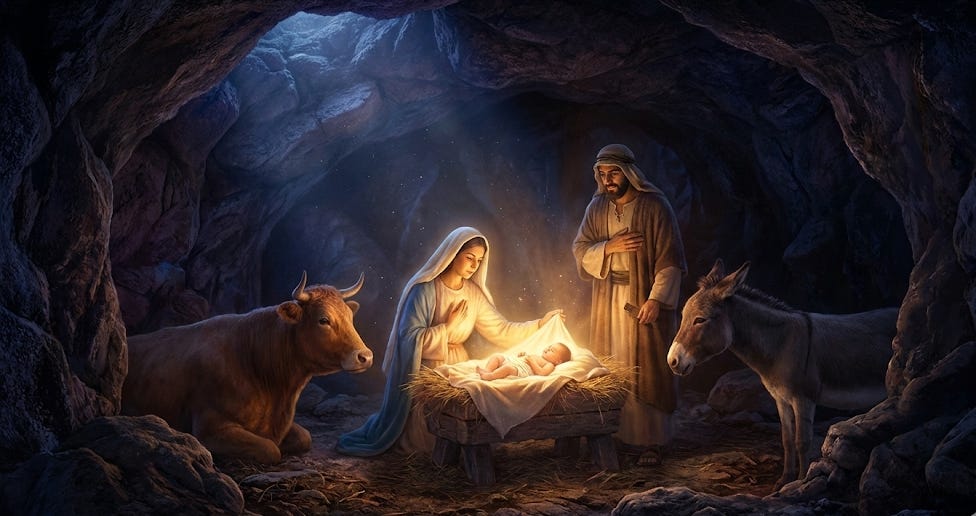
25 December – Nativitas Domini (Christmas Day) [Duplex]
1. 24 December I Vespers – Office for I Vespers of Christmas (No Commemorations)
2. Matins – Matins of Christmas
3. Laudes – Lauds of Christmas (No Commemorations)
4. Little Hours -the little hours are structured normally during this period and will be dealt with very little here. The sole variation is the above mentioned doxologies at the hymns, and the fact that Qui natus es de Maria Virgine is added to the respond following the Lectio Brevis at Prime from 25 December through 5 January inclusive.
5. II Vespers – II Vespers of Christmas
(all Commemorations from here on out should be prayed in the order listed)
a) Commemoration of the Feast of Saint Stephen
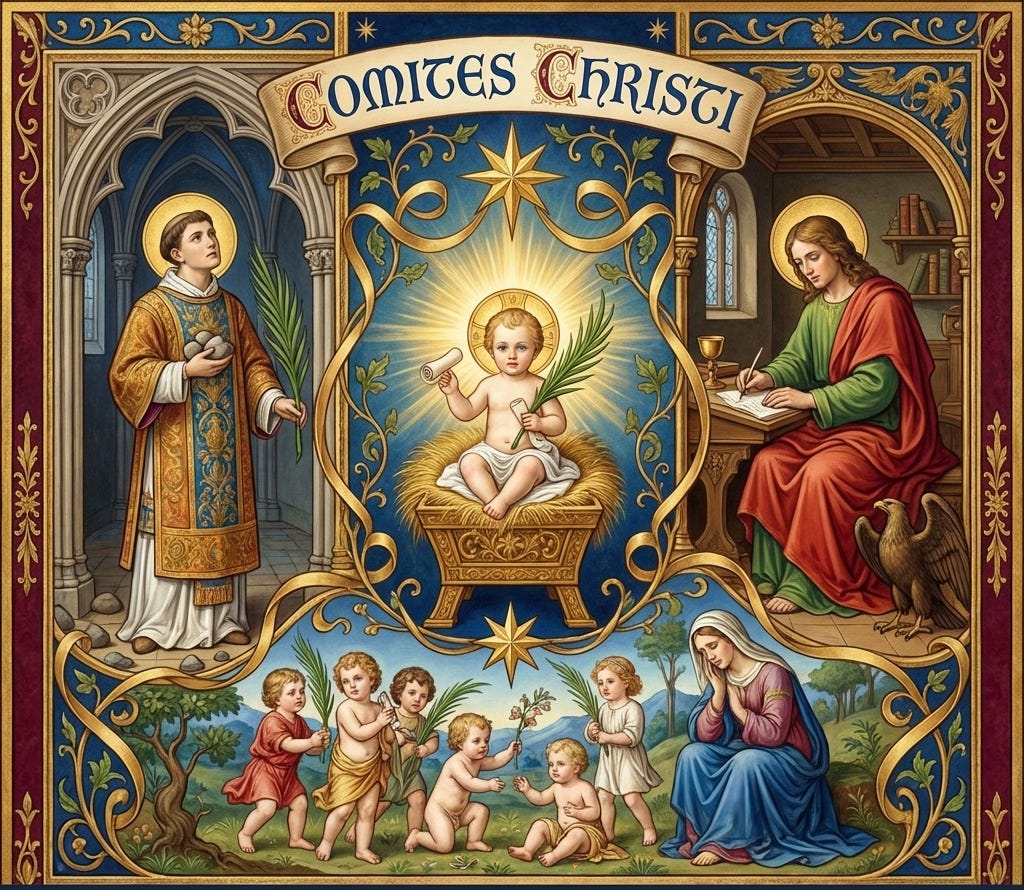
26 December – The Feast of Saint Stephen (Duplex)
1. Matins – Proper antiphon for the Invitatory Psalm and proper readings and Gospel. Hymn, Psalms, and antiphons from the Common of a Single Martyr.
2. Laudes – Propers from the Feast of Saint Stephen with the hymn from the Common of a single Martyr
a) Commemoration of Christmas Octave
3. Vespers – Psalms and antiphons from II Vespers of Christmas.
· These will be the Psalms and antiphons at every Vespers up to and including Vespers of 30 December. The rubrics that I have seen at least are slightly vague on the following point but it is my belief that these Christmas antiphons are to be doubled i.e. recited in the duplex fashion on each of these nights regardless of whether either the feast that precedes or follows is a semiduplex or not.
- Everything from the Chapter reading onward is from proper from the Feast of Saint Stephen save the hymn from the Common of a single Martyr.
a) Commemoration of the Feast of Saint John the Evangelist
b) Commemoration of the Octave of Christmas
27 December – The Feast of Saint John the Evangelist (Duplex)
1. Matins – Invitatory antiphon, Hymn, Psalms and their antiphons all come from the Common of the Apostles. Proper Readings and responds for the Feast of Saint John.
2. Laudes – Propers from the Feast of Saint John, Hymn from the Common of the Apostles
a) Commemoration of the Octave of Christmas
b) Commemoration of the Octave of Saint Stephen
3. Vespers – Psalms and their antiphons from II Vespers of Christmas. Everything from the chapter reading onward propers from the Feast of Saint John save the Hymn from the Common of the Apostles
a) Commemoration of the Feast of the Holy Innocents
b) Commemoration of the Octave of Christmas
c) Commemoration of the Octave of Saint Stephen
28 December – The Feast of the Holy Innocents (Duplex)
1. Matins - Invitatory antiphon from the Common of many Martyrs. Proper hymn Audit tyrannus. Psalms and antiphons from the Common of many Martyrs with the exception that the antiphon for the second psalm of the third nocturn, Psalm 33, is proper: Isti sunt… (This will be marked somewhere in any respectable breviary)
a) The Te Deum is not said on this Feast unless it happens to fall on a Sunday. As a corollary the vestment worn at Mass is purple unless, again, it falls on a Sunday where it is red.
2. Laudes – Propers from the Feast of the Holy Innocents including the hymn Salvete flores
a) Commemoration of the Octave of Christmas
b) Commemoration of the Octave of Saint Stephen
c) Commemoration of the Octave of Saint John the Evangelist
3. Vespers – Psalms and their antiphons from II Vespers of Christmas. From the chapter reading onward propers from the Feast of the Holy Innocents including the hymn Salvete flores.
a) Commemoration of Saint Thomas Beckett/If the following day, 29 December, is a Sunday then Thomas Beckett is transferred to the day after that, 30 December, and the Sunday in the Octave of the Nativity is commemorated here in its place.
b) Commemoration of the Octave of Christmas
c) Commemoration of the Octave of Saint Stephen
d) Commemoration of the Octave of Saint John the Evangelist
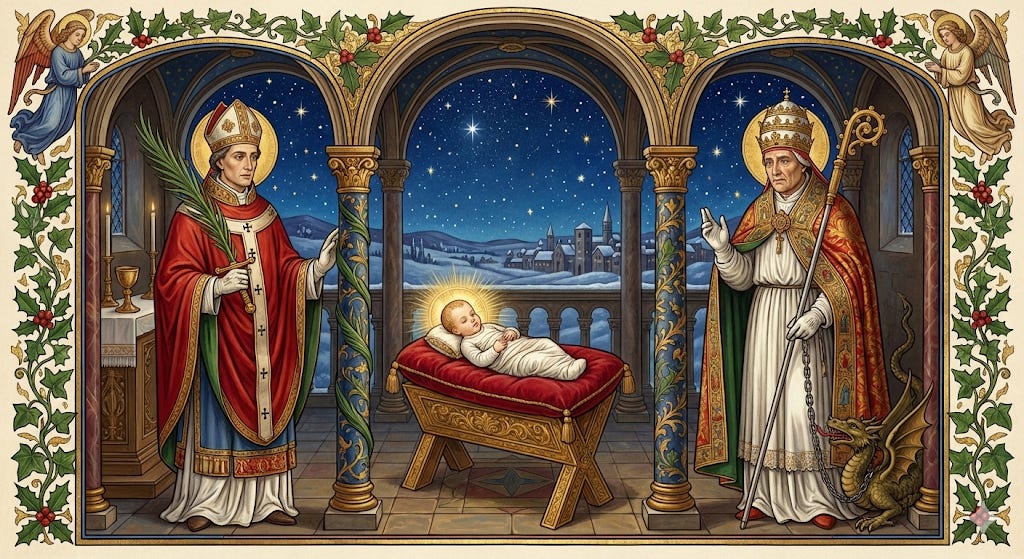
29 December – The Feast of Saint Thomas Beckett (Semiduplex)
If 29 December falls on a Sunday then this Feast is transferred to the 30th
1. Matins – Everything is from the Common of a single Martyr except for proper readings in the second and a proper Gospel and homily in the third nocturn.
2. Laudes – Everything from the Common of a single Martyr. Proper oratio.
a) Commemoration of the Octave of Christmas
b) Commemoration of the Octave of Saint Stephen
c) Commemoration of the Octave of Saint John the Evangelist
d) Commemoration of the Octave of the Holy Innocents
3. Vespers – Psalms and their antiphons from II Vespers of Christmas. Everything from chapter reading on is the Office of Sunday in the Octave of the Nativity, or from the 31 December Feast of Saint Sylvester, or from the infra Octavam Office outlined below, depending on the date of Saint Thomas Beckett’s celebration or if we are in a year where the infra Octavam is used.
a) Commemoration of Saint Thomas Beckett
b) Commemoration of the Octave of Christmas
c) Commemoration of the Octave of Saint Stephen
d) Commemoration of the Octave of Saint John the Evangelist
e) Commemoration of the Octave of the Holy Innocents
30 December – The ‘Sunday’ in the Octave of the Nativity (Semiduplex)
If the Sunday within the Octave of the Nativity falls on 29 or 30 December then this office is celebrated on that day. If the Sunday in the Octave however should fall on 31 December then it is reduced to a commemoration at I Vespers and Lauds of the Feast of Saint Sylvester with the ninth reading at Matins on the aforementioned Feast of Saint Sylvester being from one of the homily readings of the Sunday Office (the breviaries don’t specify which). Every other year this Office is celebrated on 30 December no matter which day of the week it falls.
1. Matins – Invitatory from the Office of Christmas Day. Hymn from the Office of Christmas Day. Psalms and their antiphons (said in semiduplex fashion) from Christmas Day. Proper readings, responds, and Gospel at Matins.
2. Laudes – Psalms and antiphons (semiduplex) from Christmas Day. Chapter reading is proper. Hymn and versicle from Christmas Day. Benedictus is proper. Oratio is proper.
a) Commemoration of the Octave of Christmas
b) Commemoration of the Octave of Saint Stephen
c) Commemoration of the Octave of Saint John the Evangelist
d) Commemoration of the Octave of the Holy Innocents
3. Vespers – Psalms and antiphons from II Vespers Christmas Day. Chapter reading proper, hymn from Christmas Day, versicle proper, Magnificat proper, oratio proper.
a) Commemoration of the Feast of Saint Sylvester/If Sunday falls on 29 December the Commemoration will be of Saint Thomas Beckett instead.
b) Commemoration of the Octave of the Nativity
c) Commemoration of the Octave of Saint Stephen
d) Commemoration of the Octave of Saint John the Evangelist
e) Commemoration of the Octave of the Holy Innocents
30 December – Infra Octavam
This infra Octavam Office is only used once every several years when, according to the vagaries of the calendar, 30 December falls on a Saturday.
1. Matins – Everything is the same as on Christmas Day except that the antiphons are recited in the semiduplex fashion, and the readings and their responds from the first two nocturns are taken from the Office of the Sunday in the Octave of the Nativity which in these years is not said. For the third nocturn there is a proper Gospel and homilies which in many pre-1911 breviaries are placed between the Office of the Sunday in the Octave of the Nativity and the Feast of Saint Sylvester.
2. Laudes – Everything is the same as the Office of Christmas Day except that the antiphons are recited in semiduplex fashion.
a) Commemoration of the Octave of Saint Stephen
b) Commemoration of the Octave of Saint John the Evangelist
c) Commemoration of the Octave of the Holy Innocents
3. Vespers - Psalms and their antiphons (duplex) from Christmas Day. From the chapter reading on everything is from the Feast of Saint Sylvester. Readings, hymns, and antiphons are taken from the Common of a Confessor Pontifex. Proper oratio.
a) Commemoration of the Sunday within the Octave of the Nativity
b) Commemoration of the Octave of Christmas
c) Commemoration of the Octave of Saint Stephen
d) Commemoration of the Octave of Saint John the Evangelist
e) Commemoration of the Octave of the Holy Innocents
31 December – The Feast of Saint Sylvester (Duplex)
1. Matins – Everything is taken from the Common of a Confessor Pontifex save the proper readings for the first two nocturns. The Gospel is Sint lumbi vestri from the Common along with its associated homily.
2. Laudes – Everything taken from the Common. Proper oratio.
a) If the feast falls on a Sunday - Commemoration of the Sunday within the Octave of the Nativity. If it is not on a Sunday then this is omitted.
b) Commemoration of the Octave of Christmas
c) Commemoration of the Octave of Saint Stephen
d) Commemoration of the Octave of Saint John the Evangelist
e) Commemoration of the Octave of the Innocents
3. Vespers – The Feast of Saint Sylvester ends at None and I Vespers of the Octave of Christmas, or the Feast of the Circumcision, of which all is proper save that its Vespers psalms come from the Common of the Blessed Virgin Mary, is said instead.
a) According to the rubrics none of the usual Commemorations are to be made at this hour but see below for a further discussion and why I have listed them here anyways.
b) (Commemoration of the Octave of Saint Stephen)
c) (Commemoration of the Octave of Saint John the Evangelist)
d) (Commemoration of the Octave of the Holy Innocents)
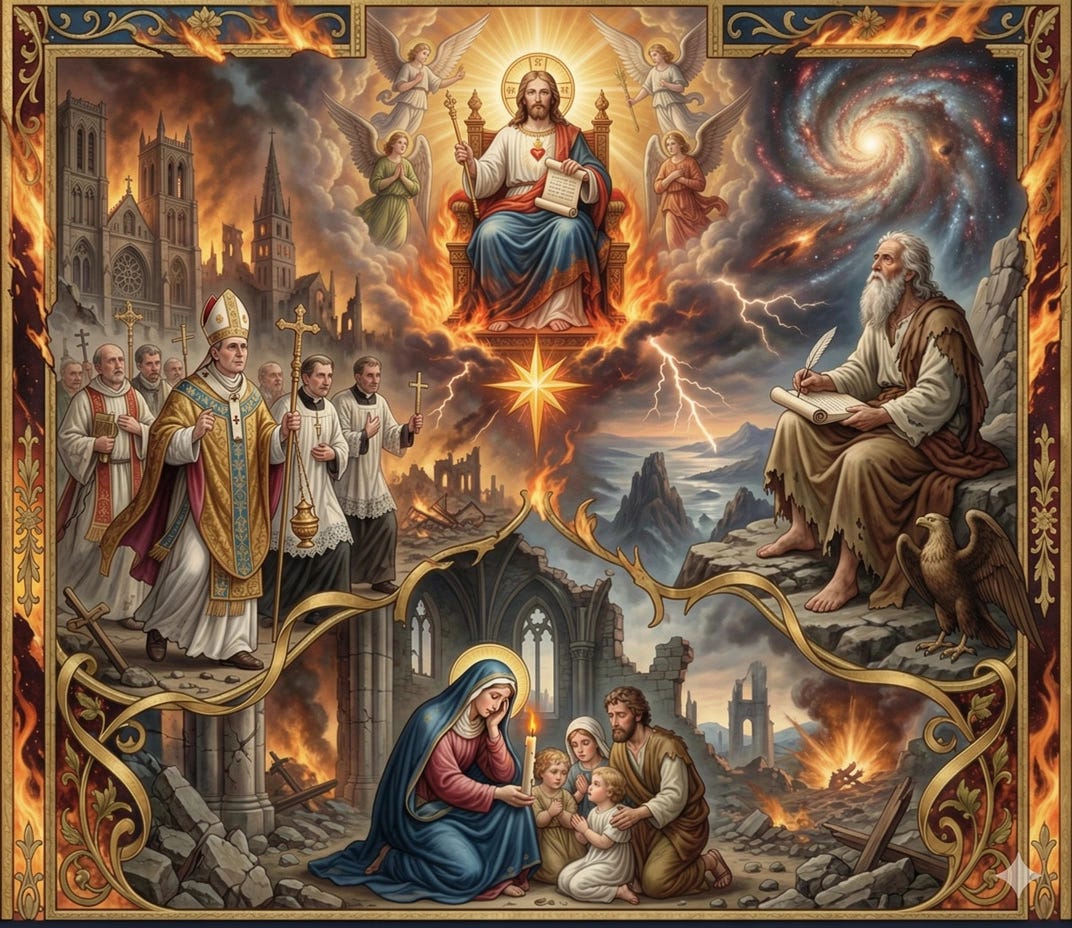
1 January – The Octave Day of the Lord’s Nativity; or the Feast of the Circumcision (Duplex)
According to the rubrics of the pre-1911 Office going back at least to 1568 Breviary of Pius V none of the above Commemorations of the rolling octaves of the comites Christi (Stephen, John, and the Innocents) that we have been commemorating on all of the above days are supposed to be made at either I Vespers or at Laudes on the Octave of Christmas and only the Octave Day of Saint Stephen, 2 January, is commemorated at II Vespers.
This has always seemed rather bizarre to me as the purpose of celebrating an octave is to do it every day for eight days. The only rationale I can figure for it is that some feasts may have been deemed too important to have any commemorations attached to them. One runs into a similar case where the octave of Saint Lawrence that runs between 10 and 17 August is not, according to the rubrics, commemorated on the Feast of the Assumption which of course takes place on 15 August.
I personally prefer to keep the commemorations since eliminating them on this day makes absolutely no sense, and keeping them does nothing to diminish the grandeur of the Octave Day. I will leave the guide according to the rubrics and place my personal preferences in parentheses
1. Matins – Invitatory antiphon and hymn taken from Christmas Day. Everything else proper.
2. Laudes – Everything proper save the hymn from Christmas Day.
a) According to the rubrics no commemorations.
b) (Commemoration of the Octave of Saint Stephen)
c) (Commemoration of the Octave of Saint John the Evangelist)
d) (Commemoration of the Octave of the Holy Innocents)
3. Vespers – Psalms from the Common of the Blessed Virgin Mary with antiphons from Lauds. Everything else proper save the hymn from Christmas Day.
a) According to the rubrics only the Octave Day of Saint Stephen is commemorated. A different oratio is used on his Octave Day than was used on the 26 December feast and all of the commemorations since then. So keep an eye out.
b) (Commemoration of the Octave of Saint John the Evangelist)
c) (Commemoration of the Octave of the Holy Innocents)
2 January – The Octave Day of Saint Stephen (Duplex)
1. Matins – Everything is said just as in the original 26 December Feast except that there are proper readings for each of the three nocturns.
2. Laudes – All is said according to the 26 December feast except for the new oratio for this and all other hours.
a) Commemoration of the Octave of Saint John the Evangelist
b) Commemoration of the Octave of the Holy Innocents
3. Vespers – Antiphons are the same as Laudes but the Psalms are the II Vespers psalms from the Common of a single Martyr i.e. 109, 110, 111, 112, and 115. Everything else, save the oratio, is drawn from 26 December.
a) Commemoration of the Octave Day of Saint John
b) Commemoration of the Octave of the Holy Innocents
3 January – The Octave Day of Saint John the Evangelist (Duplex)
1. Matins – All is identical to the 27 December Feast except for proper readings in all three nocturns including a gorgeous selection from the Apocalypse during the first nocturn.
2. Laudes – Identical to 27 December.
a) Commemoration of the Octave of the Holy Innocents
3. Vespers – Antiphons from Laudes but the Psalms are from II Vespers of the Common of the Apostles i.e. 109, 112, 115, 125, and 138. From the chapter reading on is from the 27 December feast.
a) Commemoration of the Octave Day of the Holy Innocents
4 January – The Octave Day of the Holy Innocents (Duplex)
1. Matins – All is the same as the 28 December Feast (including the proper antiphon for Psalm 33 in the third nocturn) except for the proper readings found at all three nocturns. And the Te Deum is indeed said today following the ninth reading at Matins. (Red vestments at Mass)
2. Laudes – All is the same as 28 December, save that today there are no Commemorations as this is last of the accompanying Octaves of Christmas.
3. Vespers – Antiphons from Laudes but the Psalms are from II Vespers in the Common of Martyrs i.e. 109, 110, 111, 112, 115. From the chapter reading on everything is from the 28 December feast.
a) Commemoration of the Vigil of the Epiphany
b) Commemoration of Saint Telesphorus, Pope and Martyr

5 January – The Vigil of the Epiphany (Semiduplex)
1. Matins – All is identical to the Octave of Christmas save that the antiphons are recited in semiduplex fashion and there are proper readings and a proper Gospel for each of the three nocturns.
2. Laudes – All is identical to the Octave of Christmas save the antiphons are recited as semiduplex, and there is a proper chapter reading, a proper antiphon at the Benedictus, and a proper oratio.
a) Commemoration of Saint Telesphorus
3. Vespers – The Vigil concludes at None and this is I Vespers of the Epiphany. Everything is proper, and from now until the conclusion of the Octave of the Epiphany the concluding doxology of the hymns will be Gloria tibi Domine, qui apparuisti hodie, cum Patre et Sancto Spiritu, in sempiterna saecula (Urban VIII: Iesu tibi sit gloria, qui apparuisti Gentibus, cum Patre et almo Spiritu, in sempiterna saecula).
6 January – The Feast of the Epiphany (Duplex)
1. Matins – this is the strange part of the Office of the Epiphany.
· There is no Invitatory Psalm or antiphon at the beginning of Matins today. Nor are the Domine labia mea aperies or the Deus in adiutorium said. Nor is there a hymn. After the Pater, Ave, and Credo are said in a low voice the next words are the antiphon that is paired with Psalm 28, the first psalm of the first nocturn: Afferte Domino… .
· The hour then proceeds more or less as is normal with its own proper psalms, antiphons, readings, etc. until the start of the third nocturn where we do find Psalm 94 as that nocturn’s first psalm. And, interestingly enough, Psalm 94 is recited with its antiphon here in a manner similar to that used at the Invitatory i.e. the psalm is broken up into stanzas and the full antiphon is recited after each stanza and the Gloria Patri. (Corrected 6 January 2026)3 The other interesting thing is that when Psalm 94 is recited on this day as part of the third nocturn of the Epiphany the Vulgate version translated by Jerome during the last quarter of the fourth century is used; whereas during the rest of the year when Psalm 94 is recited as the Invitatory Psalm the pre-Hieronymian Roman translation is used.
This use of Psalm 94 only occurs on 6 January. During the rest of the Octave of the Epiphany Matins assumes its regular form with its usual introductory invocations, followed by Psalm 94 with its proper antiphon Christus apparuit… as the Invitatory. Then the proper hymn Crudelis Herodes, after which come the nocturns. Psalm 86 is then used in place of Psalm 94 at the start of the third nocturn.
2. Laudes – all propers of the Epiphany
3. Little Hours – at Prime Qui apparuisti hodie is inserted into the responds following the lectio brevis and will remain there for the remainder of the Octave.
4. Vespers – all is proper to the Feast of the Epiphany.
From this point on the cycle ends and everything proceeds in more or less normal fashion as the liturgical year begins to run its course toward Septuagesima without any exceptional variations.
I have addressed the question of the Feasts of the Holy Name of Jesus and of the Holy Family in this article here and I still stand by those arguments.
It was pointed out to me by a commenter quite correctly that what I said here was not the entire truth. The current date of early January for the Feast of the Holy Name was indeed instituted by Pius X, but for at least 150 years before that the Feast of the Holy Name had been celebrated outside of Christmastide on the Second Sunday after the Epiphany, which is a problematic date in and of itself as it supplants the liturgical celebration of the last stage of the Divine manifestation at the Wedding at Cana.
I still stand however by the arguments made in the article linked to in the above footnote, however, which I realize might be unpopular with some but are in fact quite sound. There is a liturgically expressed cycle of Our Lord’s public manifestation that proceeds continuously from the First Sunday of Advent through Christmas and Epiphany-tide really until Septuagesima. It is a thing that is both necessary in itself and as a preparation for the upcoming Paschal Cycle and it ought to be left in peace.
My apologies. In the initial publication of this article I had stated that the antiphon was split into two sections as at the Invitatory but once I recited the Epiphany Office this year I realized I had been mistaken and that the antiphon is indeed recited in full after every stanza. Mea culpa!
In English dioceses, in better days, St Thomas's feast had an octave too. Within the octaves his took precedence after that of the the Nativity.
I think I remember from Dom Alcuin Reid's book on the development of liturgy that Mr. Anti-Modernism re-wrote the Breviary in 1911 in exactly the same non-organic way that the Consilium re-wrote the calendar and the Missal. But the Breviary had been tuckered with many times between Jesus and Pius X, I'm sure